

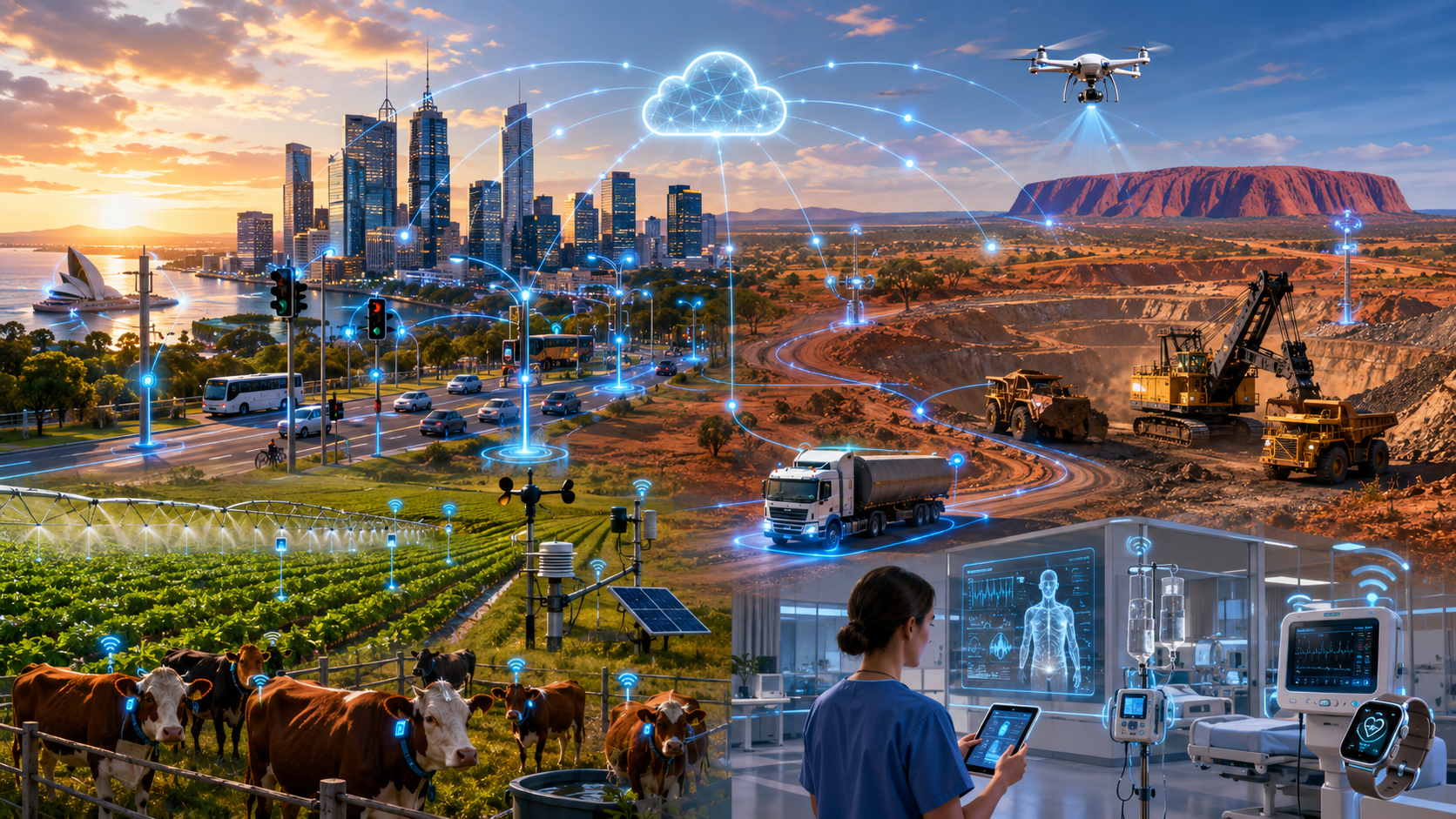
The Internet of Things is playing a growing role in Australia’s digital transformation. It connects physical objects such as machines, vehicles, appliances, meters, medical devices, and environmental sensors to digital networks. Through this connection, organisations can collect real-time information, analyse conditions, and respond more quickly. In Australia, IoT is particularly important because it supports industries that operate across wide geographic areas and depend on accurate, timely data.
One of the clearest benefits of IoT is improved connectivity. Many Australian businesses need to manage operations across cities, regional towns, coastal areas, and remote inland locations. IoT allows them to monitor assets without being physically present. A logistics company can see where its trucks are, a farmer can check soil conditions from a mobile device, and a mining company can track machinery performance from a control centre. This level of visibility helps organisations reduce uncertainty and make faster decisions.
The agricultural industry has embraced IoT as part of a broader move toward precision farming. Sensors, GPS tools, automated pumps, drones, and connected weather stations allow farmers to understand their land in greater detail. Instead of applying water, fertiliser, or chemicals evenly across an entire property, farmers can use data to target specific areas. This improves efficiency and reduces waste. IoT can also support livestock management by monitoring animal movement, location, and health indicators.
In mining, IoT contributes to productivity and safety. Australia’s mining sector often operates in remote and challenging environments where equipment failure can be expensive and dangerous. Sensors installed on vehicles, conveyor systems, drills, and processing equipment can detect changes in vibration, pressure, temperature, or performance. These signals help maintenance teams predict failures before they happen. IoT also supports remote operations, allowing some tasks to be supervised from safer locations.
IoT is also transforming cities and public infrastructure. Smart city projects use connected systems to manage traffic flow, public lighting, waste services, water supply, and environmental monitoring. These technologies help governments understand how infrastructure is being used and where improvements are needed. For residents, this can mean better transport management, cleaner public spaces, more efficient utilities, and improved safety.
For Australian businesses, IoT creates opportunities beyond operational efficiency. Data from connected devices can become the foundation for new products and services. For example, equipment providers can offer monitoring services, insurers can design usage-based policies, and energy companies can provide customers with detailed consumption insights. Retailers can use IoT to improve stock management and protect perishable goods, while healthcare providers can use connected devices to support patients outside hospitals.
The growth of IoT is closely connected to advances in 5G, cloud computing, edge computing, and artificial intelligence. Faster and more reliable networks allow devices to send data with lower delay. Edge computing allows some data processing to happen closer to the device, which is useful for applications that need quick responses. Artificial intelligence can help interpret large volumes of IoT data and identify trends that humans may miss.
At the same time, IoT brings important responsibilities. Businesses must protect connected devices from cyberattacks, manage data carefully, and ensure systems are reliable. Privacy must be respected, especially when data relates to people’s health, location, energy use, or behaviour. Companies also need skilled workers who can install, manage, and interpret IoT systems effectively.
Australia’s IoT development is helping businesses become more connected, efficient, and innovative. By linking physical operations with digital intelligence, IoT is strengthening industries and supporting a more flexible, data-driven economy.