

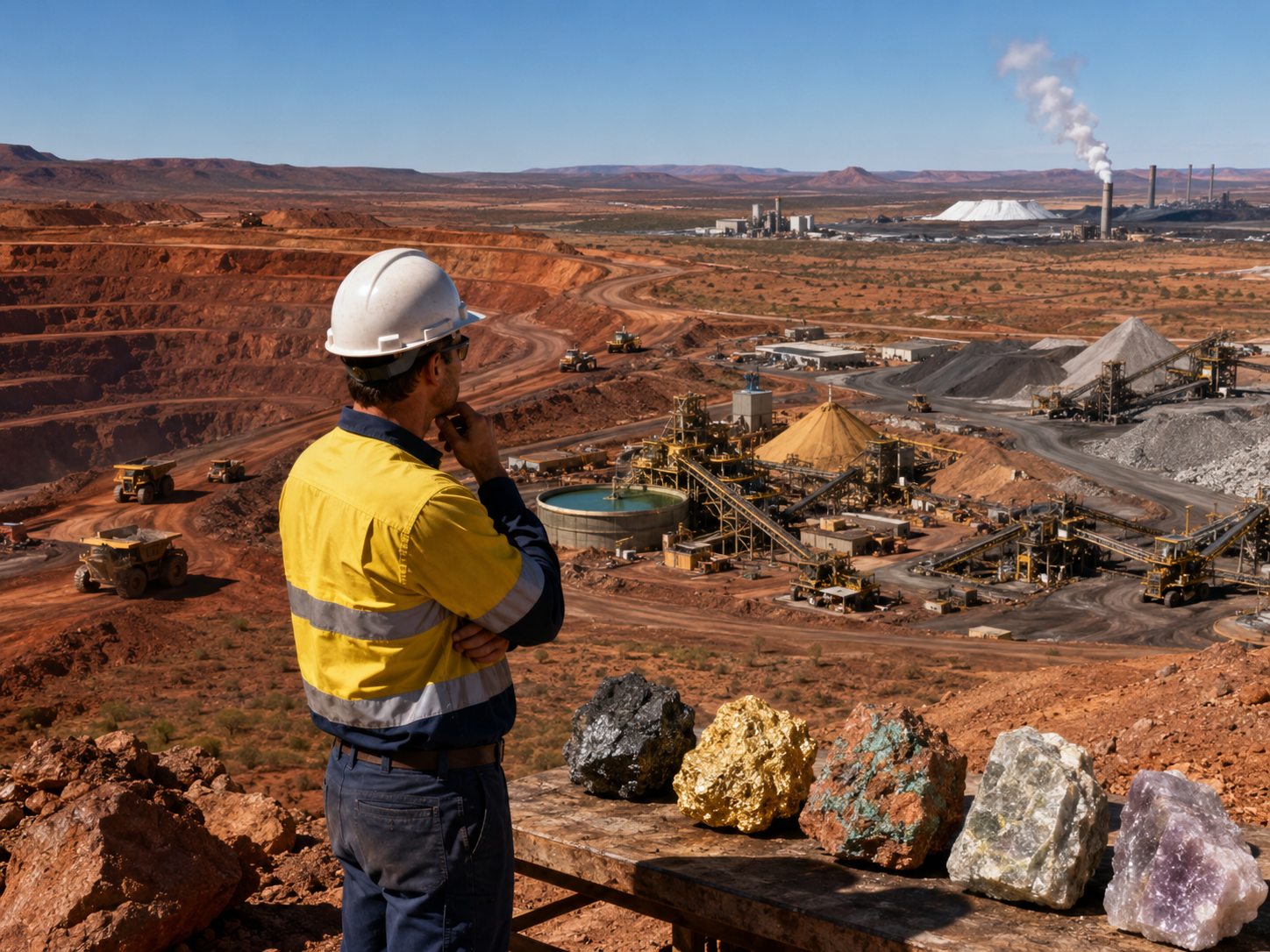
A portfolio containing five mining companies may appear diversified, but it can remain highly concentrated if all five depend on the same commodity, customer base or economic cycle.
For example, several iron ore producers may all be exposed to Chinese steel demand. Multiple lithium developers may be affected by the same battery inventory cycle and financing conditions.
The Australian Securities Exchange provides company announcements, financial reports and market information that investors can use to compare operational guidance and commodity exposure.
Start With the Economic Role of Each Commodity
Iron ore is closely tied to steel production, infrastructure and Chinese industrial activity. Gold is influenced by real interest rates, currencies, central-bank demand and geopolitical uncertainty.
Copper benefits from construction and electrification, while lithium demand is more directly linked to battery production and electric-vehicle adoption. Coal remains connected to energy security and steelmaking but faces significant policy and financing risks.
Combining commodities with different demand drivers may reduce dependence on a single macroeconomic outcome.
Large Miners Versus Smaller Producers
Large diversified miners generally offer stronger balance sheets, established infrastructure and easier access to capital. Their scale can support dividends and long-term project development.
However, large companies may provide less dramatic upside than successful smaller producers. Junior miners and developers can rise sharply when they discover resources, secure permits or begin production.
They can also fall heavily when drilling results disappoint or construction funding becomes unavailable.
A balanced portfolio may combine core exposure to established producers with a smaller allocation to higher-risk growth companies.
Gold Can Act as a Portfolio Counterweight
Australian gold shares may provide diversification when economic uncertainty weakens industrial commodities. A lower Australian dollar can also improve local revenue for producers selling gold in US dollars.
Gold stocks are not perfect defensive assets. Operational failures, rising costs and hedging losses can cause a producer to underperform even when the gold price rises.
Investors should distinguish between exposure to the metal and exposure to the management of a mining business.
Income Investors Need Stress Tests
High mining dividends can be attractive, but portfolio planning should not assume that recent distributions will continue.
A useful stress test is to estimate whether the company could fund its dividend if the relevant commodity price fell materially. Investors should also examine net cash, debt, capital commitments and the cost of maintaining existing operations.
Companies with flexible payout policies may reduce dividends during weaker periods rather than borrowing to preserve an unsustainable yield.
Position Sizing Is as Important as Stock Selection
Commodity shares can experience large price movements following production updates, policy changes or shifts in global demand. Position sizing can prevent one unsuccessful project from causing excessive portfolio damage.
Investors may also stagger purchases rather than committing all capital at one point in the cycle. This reduces the risk of buying after commodity prices and investor expectations have already peaked.
Building a More Resilient Strategy
A disciplined Australian commodity portfolio can include diversified miners, selective gold exposure, carefully chosen energy-transition companies and sufficient cash for volatility.
The central objective is not to predict every commodity movement correctly. It is to own financially resilient companies at reasonable valuations while limiting exposure to projects that depend on perfect execution.
Investors who combine commodity analysis, company fundamentals and portfolio risk controls are better positioned to benefit from Australia’s resources industry without becoming overly dependent on a single market cycle.