

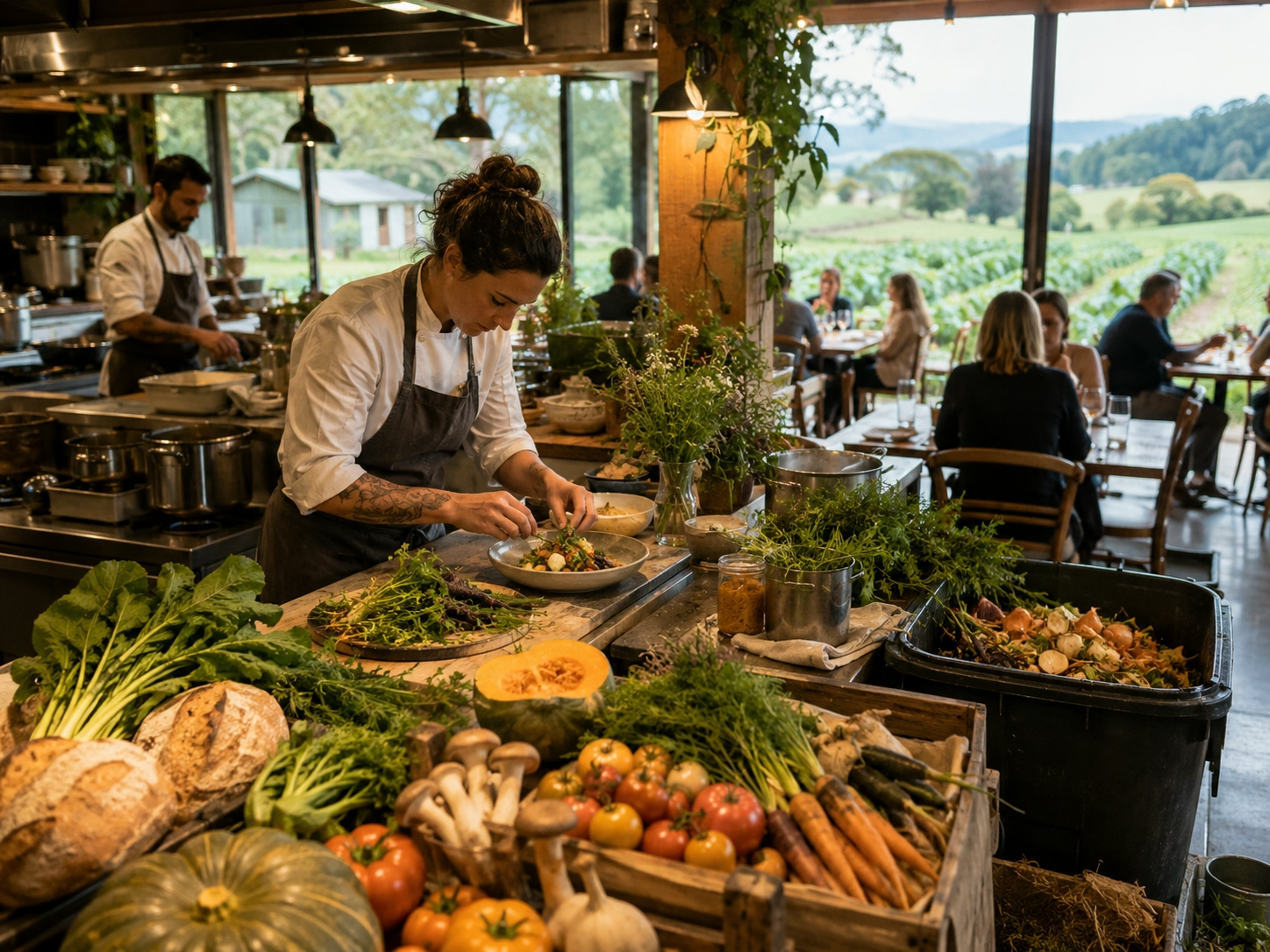
Australia has always been a nation of immigrants, but in 2026 the culinary consequences of that demographic reality are more visible—and more profitable—than ever. The country’s restaurant scene is no longer dominated by Anglo-European menus with token “ethnic” additions. Instead, first- and second-generation migrant chefs are building entirely new categories, blending traditions, and redefining what “Australian food” means.
The Data Behind the Diversity
The Australian Bureau of Statistics’ Food Services Industry report (March 2026) reveals that restaurants specialising in Asian, Latin American, African, and Middle Eastern cuisines now make up 47% of all licensed venues in metropolitan areas, up from 31% in 2019. Consumer spending on these cuisines grew 26% year-on-year, three times faster than spending on traditional European fare. The full dataset is available at https://www.abs.gov.au/.
The Rise of Fusion 2.0
Fusion is no longer a dirty word. In 2026, the most exciting restaurants are those that treat culinary boundaries as starting points, not rules. Melbourne’s “Seoul Arepa” combines Korean bulgogi with Venezuelan corn cakes, creating a dish that has developed its own cult following. Sydney’s “Pho King” serves Vietnamese pho with a smoky Middle Eastern spice blend. These are not gimmicks; they are logical expressions of chefs who grew up navigating multiple food cultures simultaneously. “My grandmother’s recipes and my neighbours’ recipes are both part of me,” says Seoul Arepa founder Ji-hye Park. “Why should I choose?”
Regional Sub-Trends
Within this broader multicultural wave, several sub-trends stand out. Ethiopian coffee ceremonies are becoming popular in Melbourne’s café scene, offering a slow, social alternative to grab-and-go espresso. Filipino cuisine, long overlooked, is finally gaining mainstream attention, with chains like Jollibee expanding aggressively and independent kamayan-style feasts selling out weekly. Peruvian-Japanese Nikkei cuisine is another standout, with three new dedicated restaurants opening in Sydney alone in the past six months.
Economic Impact and Policy
The immigrant-driven restaurant boom is not just a cultural story—it is an economic one. Migrant-owned food businesses employ 38% more people per venue than the industry average and are more likely to source ingredients from local small suppliers. However, challenges remain: visa restrictions, access to commercial leases, and language barriers still hinder many talented chefs. Industry advocates are pushing for a dedicated “hospitality visa” to fast-track skilled culinary workers, and several state governments have introduced grants for migrant food entrepreneurs.
The New Australian Menu
In 2026, a typical Australian dinner might include Korean corn dogs, Ethiopian injera with native pepperberry dip, and a Filipino ube dessert. That is not a trend; that is a new national identity being written one dish at a time. The most successful restaurant operators are those who understand that the future of Australian food is not a return to any single tradition, but a celebration of all of them.