

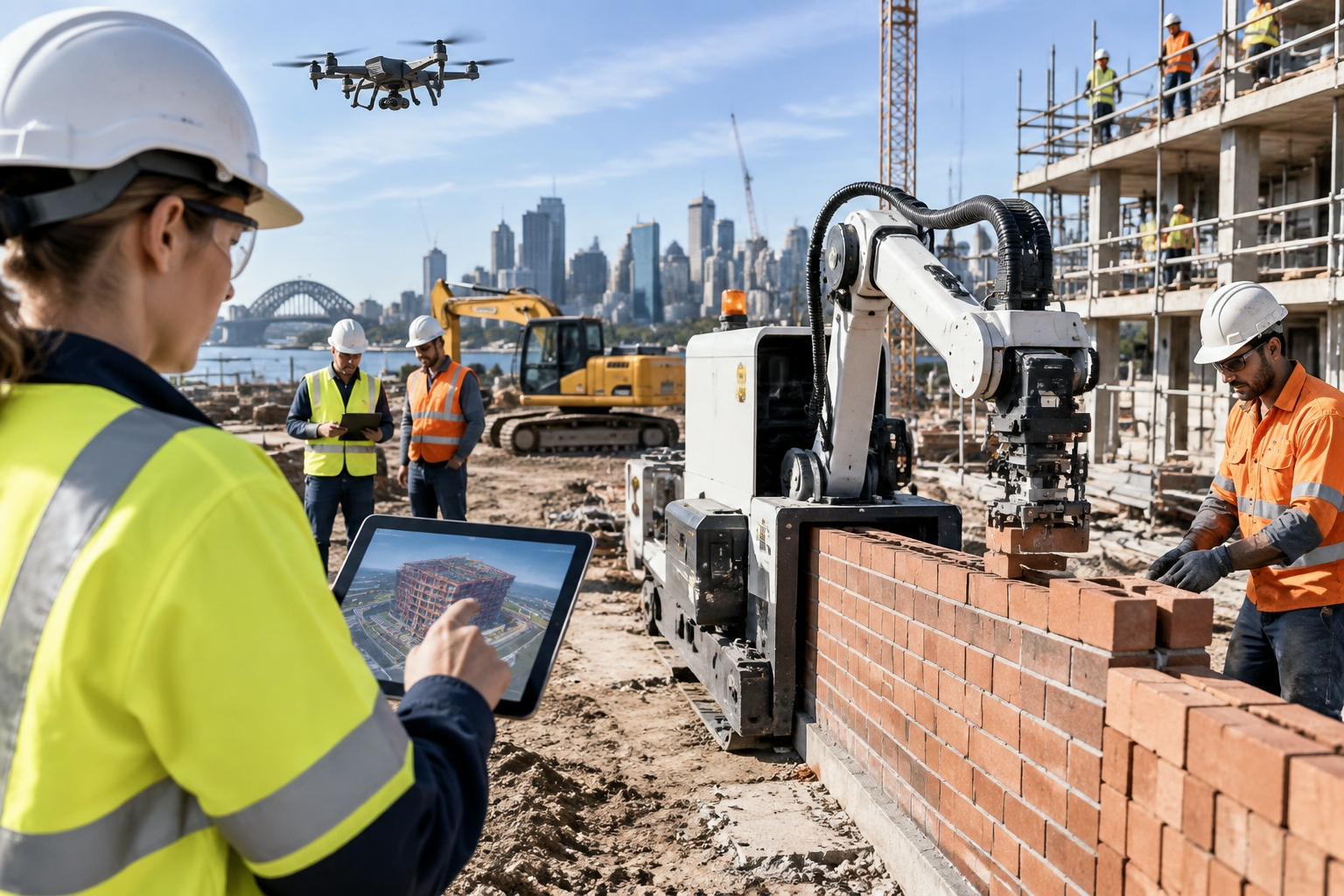
While cranes and concrete dominate the skyline, a silent revolution is happening in the back offices and site sheds of Australian construction firms. The industry, long criticized for lagging behind in technology adoption, is now embracing sophisticated software to manage complex projects. The era of paper blueprints and Excel spreadsheets is fading, replaced by “Digital Twins,” AI-driven analytics, and integrated cloud platforms. This software revolution is changing how project managers predict risks, manage budgets, and coordinate the thousands of moving parts on a modern build.
What is a Digital Twin?
A Digital Twin is a virtual replica of a physical building or infrastructure asset. It is not just a 3D model; it is a living database that updates in real-time. As workers install pipes or pour concrete, sensors and mobile apps feed data back to the twin. This allows project managers in Sydney to monitor the progress of a dam in Queensland with total clarity.
The value of this technology lies in “clash detection.” In the past, a mechanical engineer’s ductwork might clash with a structural engineer’s beam, only to be discovered during construction—a costly error. With a Digital Twin, these clashes are identified in the design phase. The software highlights the conflict, allowing designers to reroute the duct before a single worker steps on site. This saves millions in rework and prevents project delays. According to the Australian Constructors Association, the adoption of digital twin technology has reduced rework rates by up to 30% on Tier 1 projects (Australian Constructors Association – Industry Outlook 2026).
AI and Predictive Risk Management
Beyond visualization, Artificial Intelligence (AI) is being used to predict the future. Software algorithms analyze historical data from past projects to forecast delays before they happen. For example, if a supply chain for steel from China is usually delayed by four weeks during a specific season, the AI can flag this risk at the start of the project.
This allows construction managers to order materials earlier or source alternative suppliers proactively. AI is also being deployed in safety. Computer vision cameras on site can detect when a worker is not wearing a hard hat or is standing in the exclusion zone of a crane, sending instant alerts to safety officers. This proactive approach to safety is reducing incident rates and lowering insurance premiums for proactive firms.
The Integration of Drones and Reality Capture
The bridge between the physical world and the digital twin is built by drones. Surveyors armed with LiDAR (Light Detection and Ranging) drones can scan a construction site in hours, creating a point cloud—a digital map of the terrain accurate to the millimeter. This reality capture is compared against the design model to ensure the earthworks are within tolerance.
This technology replaces the traditional method of surveyors walking the site with tripods, a process that could take days. The speed of data capture allows for weekly progress payments to be validated instantly. Instead of arguing over whether 40% or 50% of the concrete slab has been poured, clients and contractors can refer to the drone scan as an objective record.
This digitization requires a new layer of management. Construction firms are hiring data analysts and software engineers alongside civil engineers. The successful Australian construction company of 2026 is not just a builder; it is a technology company that happens to build things. This convergence of data and dirt is creating a more resilient, efficient, and transparent industry capable of delivering the massive infrastructure pipeline the nation demands.