

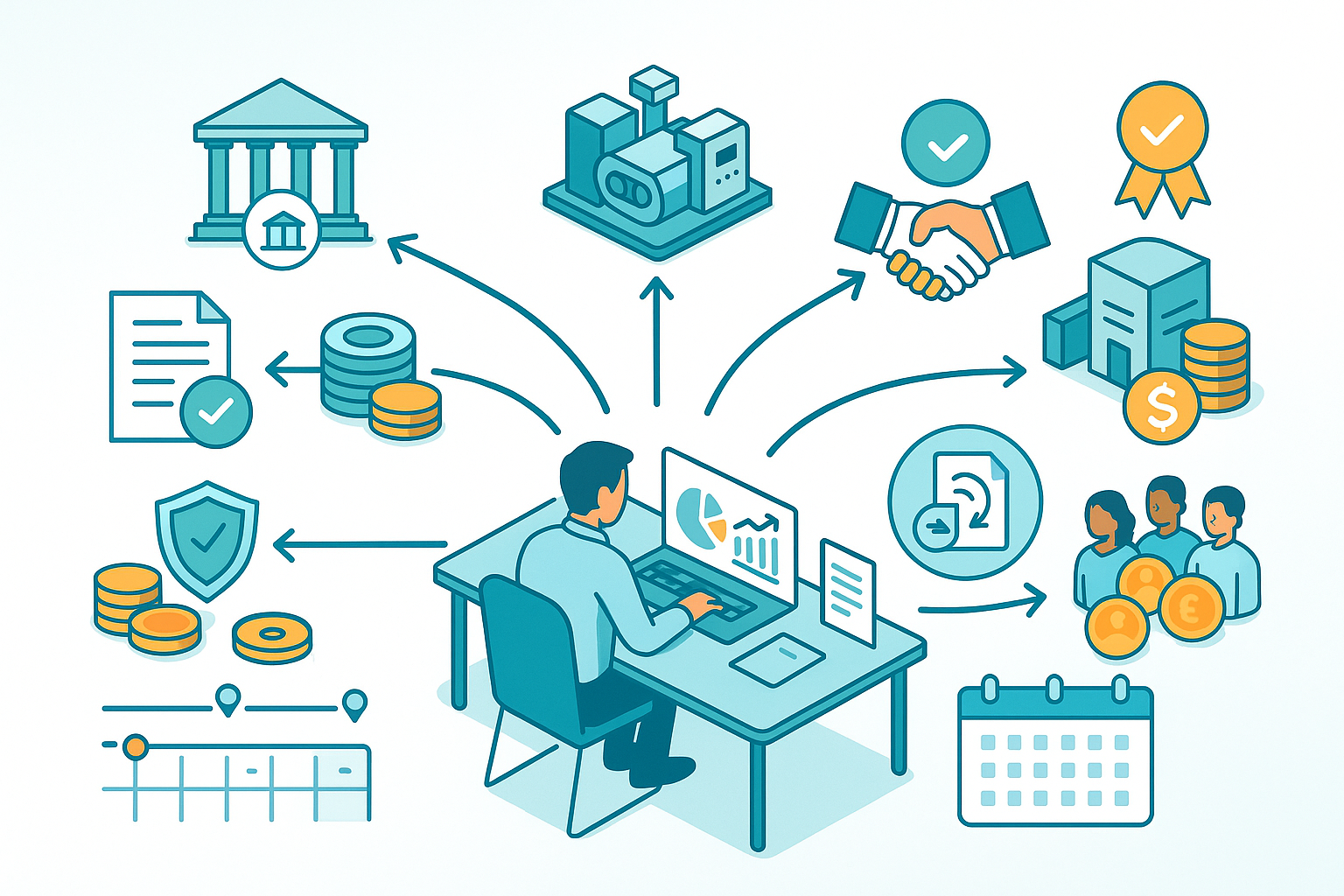
Start with clarity: what problem does the money solve, what milestones prove success, and how does the funding instrument fit revenue timing? Short‑term working‑capital gaps often suit overdrafts or invoice finance; multi‑year assets fit term loans or equipment finance; market entry and product bets may call for grants or equity. Combine instruments to reduce cost and concentration risk.
Debt options are varied. Banks offer overdrafts, lines of credit, term loans, asset finance, and trade solutions. Pricing reflects risk, security, and financial discipline. Non‑bank lenders and fintechs expand access with quicker decisions and looser collateral rules, useful for bridging opportunities. Keep an eye on covenants, fees, and early‑repayment terms. Strengthen your case with reliable management accounts, aged receivables, rolling cash‑flow forecasts, and evidence of payment discipline from customers.
Public support can materially change the economics. The R&D Tax Incentive encourages eligible development by refunding or offsetting part of the cost. Export programs assist with market development expenses, and Export Finance Australia can back viable export contracts when bank risk limits bite. States and local councils add digital adoption, energy, and regional growth grants. Many programs require matched funding and deliverables, so set up a grant calendar, track evidence from day one, and avoid scope creep.
Equity and near‑equity power acceleration. Angels and VCs bring capital plus networks, but expect governance, reporting cadence, and a path to scale. Early Stage Innovation Company tax incentives can make qualifying investments more attractive to investors. Equity crowdfunding enables community raises via ASIC‑licensed platforms; it demands a sharp story, realistic valuation, and a plan for ongoing shareholder communication. Convertibles and revenue‑share instruments can bridge to a later priced round with less dilution.
Execution risks are manageable with preparation. Build a tidy data room: constitutions, cap table, major contracts, IP assignments, financials, KPIs, and policies. Draft a crisp two‑page use‑of‑funds plan linking dollars to milestones and runway. Stress‑test your model for slower sales, cost overruns, and late payments; show mitigation steps such as expense triggers or progress billing. Network early with lenders, advisors, and investors—warm relationships beat cold outreach when timing is tight. Finally, monitor key ratios (DSO, DPO, inventory turns, interest cover) so you spot tightening conditions before they bite, and adjust the capital mix while choices remain open.