

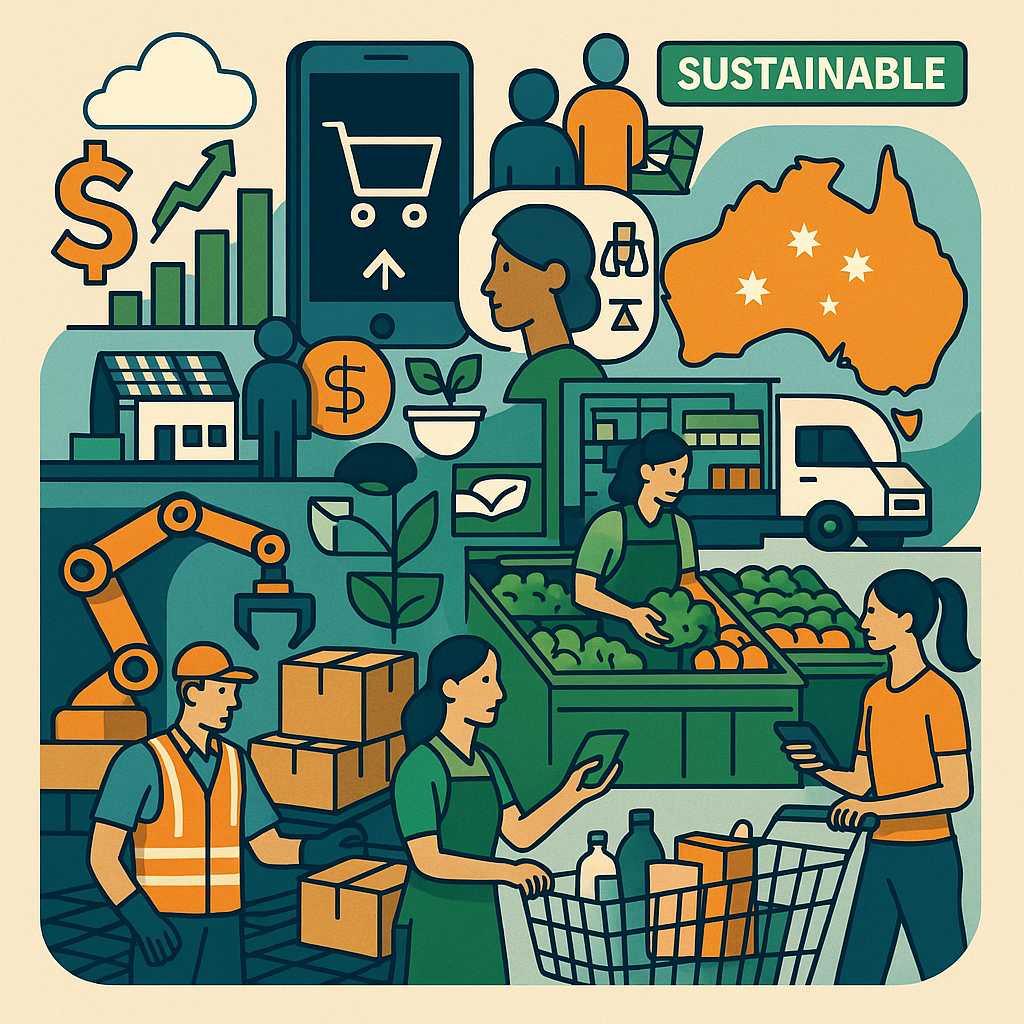
Looking ahead, Australian retail companies face a landscape defined by rapid technological progress, shifting social values, and persistent economic uncertainty. Their historical dominance gives them resources and reach, but the future will test how agile and responsive they can be in the face of new pressures and opportunities.
One of the most significant trends is the deeper integration of advanced analytics and automation. Major retailers already use data to set prices, manage inventory, and plan promotions, but the next phase involves more predictive approaches. Artificial intelligence tools can forecast demand more accurately, reduce waste in fresh food categories, and customise offers at an individual level. Automation in warehouses and, potentially, in-store tasks can boost efficiency but also raises questions about employment and customer service expectations.
Sustainability is no longer a niche concern. Many Australian consumers expect retailers to take responsibility for reducing environmental impact across the supply chain. This includes tackling plastic packaging, improving energy efficiency, and supporting more sustainable farming and manufacturing practices. Large companies are under pressure to set measurable targets and report progress, as stakeholders increasingly view climate and environmental performance as part of corporate reputation. Retailers that can link sustainability initiatives to tangible benefits—such as fresher produce, better quality, or cost savings—may be better able to secure consumer support.
Economic conditions will continue to influence how dominance is perceived. When times are tough, shoppers pay closer attention to price differences and promotional cycles. Value retailers and discount formats may gain ground, while premium and discretionary categories can become more volatile. Dominant companies must balance the need to protect margins with the risk of appearing out of touch with household pressures. Strategies such as everyday-low-price ranges on essentials, transparent communication about cost drivers, and expanded budget-friendly options may all play a role.
International competition is another ongoing factor. Global brands and e-commerce platforms see Australia as an attractive but relatively small market, which encourages careful, targeted expansion. Their presence pushes local players to match global standards in user experience, product depth, and innovation. For large Australian retailers, partnerships with international brands or marketplace models can be a way to broaden offerings without bearing all the risk of direct imports.
Consumer expectations around ethics and inclusion are also evolving. Issues such as labour conditions, diversity in marketing and hiring, and support for local communities are steadily gaining prominence. Retail companies are expected not only to sell products, but to demonstrate social responsibility. This adds another dimension to dominance: it is no longer enough to be big; companies are increasingly judged on how they use that influence.
Finally, resilience has become a strategic priority. Recent disruptions—from natural disasters to global supply chain interruptions—have highlighted the vulnerabilities of long, complex sourcing networks. Australian retailers are reassessing supplier diversity, buffer stocks, and local manufacturing opportunities. Those with strong logistics, robust supplier relationships, and flexible sourcing strategies are better positioned to maintain availability and trust during future shocks.
In summary, the future of Australian retail dominance will be shaped by a combination of technological capability, ethical leadership, and sensitivity to changing consumer needs. Large companies have the resources to invest in innovation and resilience, but they must also listen closely to their customers. The Australian shopper of the coming years will likely reward retailers that combine scale with genuine responsiveness, turning size into a platform for better experiences, fairer practices, and more sustainable choices.