

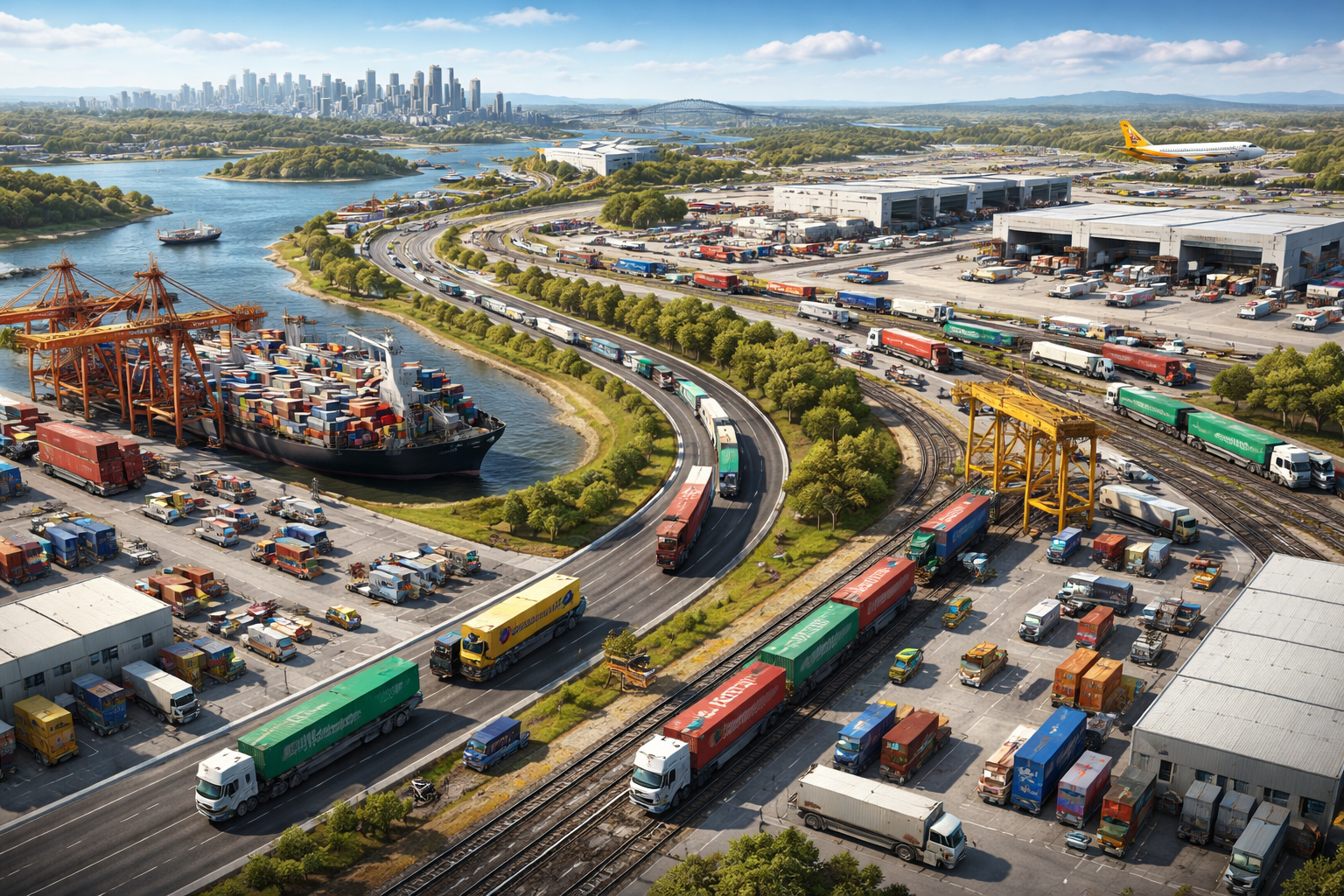
Running logistics in Australia is a test of scale, speed, and precision. Freight must travel between distant cities, reach remote communities, and connect exporters to international markets. Logistics and transportation companies meet these demands by anchoring operations to Australia’s key infrastructure and applying process and technology improvements that reduce cost while protecting service levels.
Infrastructure foundations: sea, land, and air links
Australia’s global trade depends on container ports such as Melbourne, Sydney’s Port Botany, Brisbane, and Fremantle, supported by bulk export terminals in resource-heavy regions. These gateways are surrounded by logistics facilities designed for rapid flow: container parks, freight stations, quarantine-aware handling, and warehousing close to port precincts to reduce drayage time.
Road networks carry the majority of domestic freight because trucking can reach virtually any destination, from metro retail stores to regional industrial sites. Rail freight is essential where volumes are large and distances are long, particularly for bulk commodities and for container movements between major cities via intermodal terminals. Air freight, operating through major airports, provides an option for urgent or high-value shipments and is closely tied to express parcel services.
Company ecosystem: national operators, parcel networks, and global coordinators
Different provider types serve different supply chain needs:
- National logistics operators (commonly including Toll, Linfox, and similar large firms) offer warehousing, transport, and end-to-end contract logistics. These companies typically run multi-client distribution centres, cross-dock facilities, and dedicated fleets tailored to industries such as retail, FMCG, automotive, and healthcare.
- Rail freight providers such as Aurizon and Pacific National support both bulk and intermodal services, often partnering with terminal operators and port-adjacent facilities.
- Parcel and last-mile leaders where Australia Post plays a dominant role, alongside private couriers and e-commerce carriers that focus on delivery visibility, convenience options, and reverse logistics.
- Global freight forwarders and integrators like DHL and other multinationals that manage ocean and air bookings, customs processes, and door-to-door international supply chains.
Where efficiency is won: network design, systems, and visibility
Australia’s distance makes utilisation critical. High-performing providers work to minimise “empty kilometres” by combining loads, aligning backhauls, and using hub-and-spoke networks that keep vehicles moving with productive freight. Cross-docking helps reduce storage and handling: inbound freight is sorted and dispatched quickly, supporting faster replenishment and lower inventory costs.
Digital systems amplify these gains. A TMS can automate load planning, route optimisation, appointment scheduling, and performance reporting. In warehouses, a WMS improves picking accuracy, supports slotting strategies, and enables labour planning. Telematics and predictive maintenance reduce breakdowns and improve safety outcomes, while real-time tracking gives customers visibility into ETAs and exceptions.
For sensitive sectors, specialised controls are non-negotiable. Cold chain logistics uses refrigerated assets, temperature monitoring, and documented procedures to protect food and medical products. Dangerous goods freight requires compliance expertise—proper classification, compatible storage, trained staff, and correct documentation.
Compliance and resilience as operational necessities
Australia’s transport environment includes heavy vehicle rules, fatigue requirements, and chain-of-responsibility obligations affecting shippers and receivers, not just carriers. Biosecurity considerations can influence how certain cargo is packed, stored, and inspected. Providers that embed compliance into workflows—training, audits, traceability—avoid avoidable delays and penalties.
Disruption planning is increasingly important, given weather extremes and congestion risks at key gateways. Strong operators prepare alternative routes, flexible carrier arrangements, and overflow warehousing options, while keeping customers informed through visibility platforms.
Australia’s logistics advantage comes from combining infrastructure access with disciplined execution: smart network design, intermodal choices, digital tools, and compliance maturity—delivering efficiency across a vast and demanding market.