

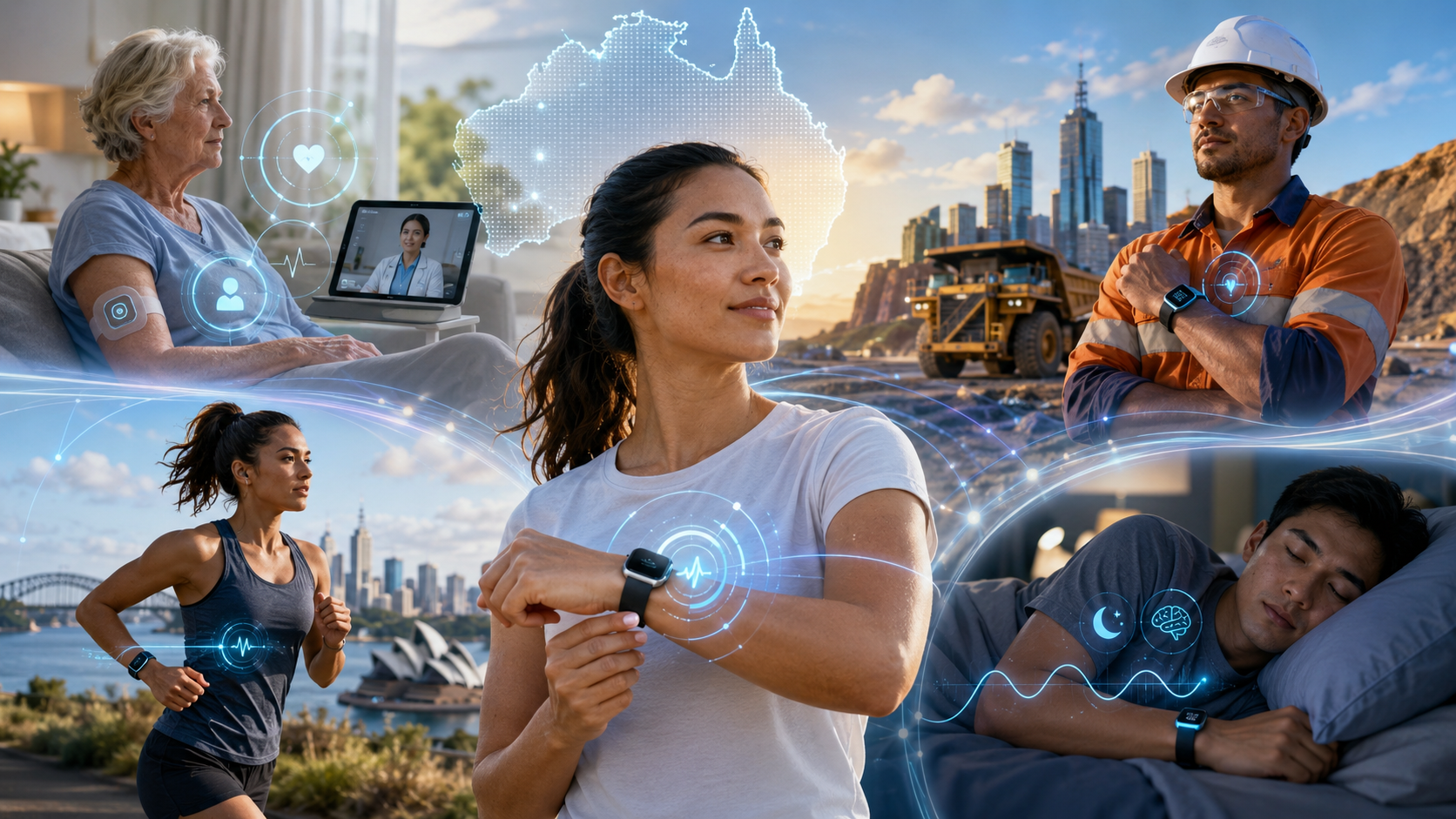
Wearable technology is becoming a powerful part of Australia’s digital economy. Devices worn on the body are now used to monitor health, guide fitness routines, improve sports performance, support elderly care, and protect workers in demanding environments. As the technology becomes more accurate and affordable, Australian start-ups have an opportunity to create products that meet local market needs and compete in specialised global niches.
The consumer market is already familiar with smartwatches and fitness bands, but demand is shifting toward more advanced insights. Users no longer want only step counts or workout summaries. They want information about sleep quality, stress, recovery, heart health, and overall wellbeing. This creates an opportunity for start-ups to develop wearable systems that combine sensors with intelligent software. The most successful products will not simply show data; they will explain what the data means and what action the user can take.
Healthcare is one of the most promising areas for wearable technology in Australia. Remote monitoring can help doctors, nurses, and carers observe patient health without constant in-person visits. This is useful for people with chronic illness, older adults, patients recovering at home, and people living in regional communities. Wearables can provide alerts when unusual patterns appear, helping healthcare teams respond earlier. Start-ups that can prove reliability and accuracy may find strong demand from medical providers and digital health platforms.
Mental health and stress management may also become important parts of the wearable market. Devices that track sleep disruption, heart rate variability, breathing patterns, and activity changes can help users notice signs of burnout or stress. While wearables cannot replace professional care, they can support self-awareness and early intervention. Australian start-ups can build tools that connect wearable data with coaching, therapy support, or workplace wellbeing programs.
The fitness and sport sector offers another clear path. Australia’s active lifestyle creates demand for devices that support running, swimming, cycling, surfing, gym training, and team sports. Professional teams may use wearables to manage athlete workload and reduce injury risk. Everyday users may want affordable tools that help them train safely and consistently. Start-ups can stand out by designing products for specific activities instead of trying to serve everyone.
Wearables for workplace safety are also gaining importance. In Australia, industries such as mining, construction, agriculture, and transport often involve physical risk, remote locations, and harsh weather. Wearable devices can monitor fatigue, heat exposure, movement, location, and environmental hazards. These tools can help employers protect workers and respond quickly to emergencies. Start-ups that understand industry needs can create rugged devices and software platforms for enterprise customers.
Market success will depend on more than good technology. Design, comfort, privacy, and trust are essential. People will not wear a device every day if it feels uncomfortable, looks unattractive, or drains battery too quickly. Businesses and healthcare providers will not adopt wearable systems unless the data is secure and useful. Start-ups must also be careful with health claims, because medical-related devices may require regulatory approval.
Partnerships can help Australian wearable companies grow. Universities can support research, hospitals can help test medical applications, sports organisations can validate performance tools, and employers can pilot safety devices. These collaborations can make products stronger and more credible.
The wearable technology trend in Australia is moving toward practical, specialised, and data-driven solutions. Start-ups that focus on real user problems, protect personal information, and deliver clear value will be well positioned. As wearables become more integrated into health, sport, work, and everyday life, Australia offers a promising environment for innovation and market expansion.