

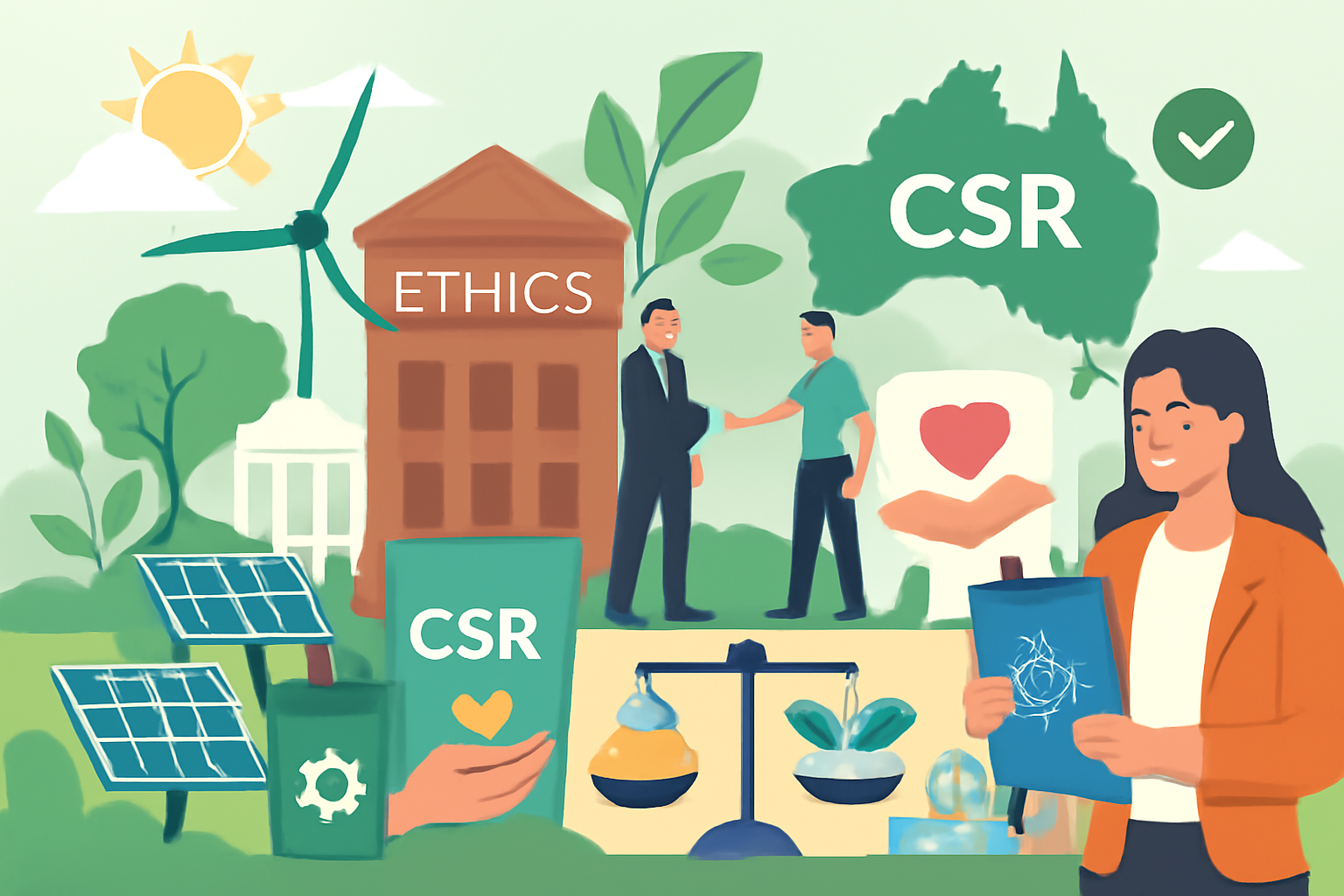
Corporate policies in Australia are evolving as businesses face increasing pressure to align with sustainable and ethical practices. Companies are embracing strategies that prioritize environmental conservation, social responsibility, and good governance in order to meet growing demands from consumers, investors, and regulators. The integration of sustainability and ethics into business practices is becoming a standard expectation, not just a competitive advantage.
In Australia, sustainability is a top priority, with the government implementing various policies that encourage businesses to reduce their environmental footprint. Regulations like the National Greenhouse and Energy Reporting Scheme (NGER) compel companies to disclose their greenhouse gas emissions and energy consumption, fostering greater transparency and accountability. This drives businesses to adopt more energy-efficient practices, reduce waste, and invest in renewable energy sources to help mitigate the impacts of climate change.
Alongside environmental sustainability, ethical practices in business are heavily emphasized within Australia’s corporate landscape. The Corporations Act and other regulatory frameworks set clear expectations for companies to operate with integrity, fairness, and transparency. Ethical business practices in Australia encompass various aspects, from ensuring consumer protection and financial integrity to fostering ethical labor practices and addressing issues like corruption and fraud.
Ethical business behavior extends beyond just the core operations of a company. Australian businesses are expected to integrate social and environmental considerations into their supply chains. This includes ensuring fair labor practices, such as paying fair wages and providing safe working conditions, and minimizing environmental impact by sourcing materials responsibly. Companies are also being increasingly held accountable for their suppliers’ practices, with pressure from consumers and regulators for businesses to ensure their supply chains are free from human rights abuses and environmental harm.
In addition, corporate social responsibility (CSR) has become a central focus for Australian businesses. Many companies are investing in programs that contribute to the welfare of local communities, environmental conservation, and the well-being of employees. Whether through charitable donations, employee volunteering programs, or environmentally friendly initiatives, businesses in Australia are increasingly recognizing their role in contributing to the greater good.
As businesses in Australia adopt more ethical and sustainable practices, they are also attracting a new generation of consumers and investors who prioritize these values. Companies that lead with integrity and sustainability are likely to foster stronger customer loyalty and attract long-term investments, positioning them for sustained growth. Ethical business practices are not just about compliance; they represent a strategic investment in the future of both the company and society as a whole.