

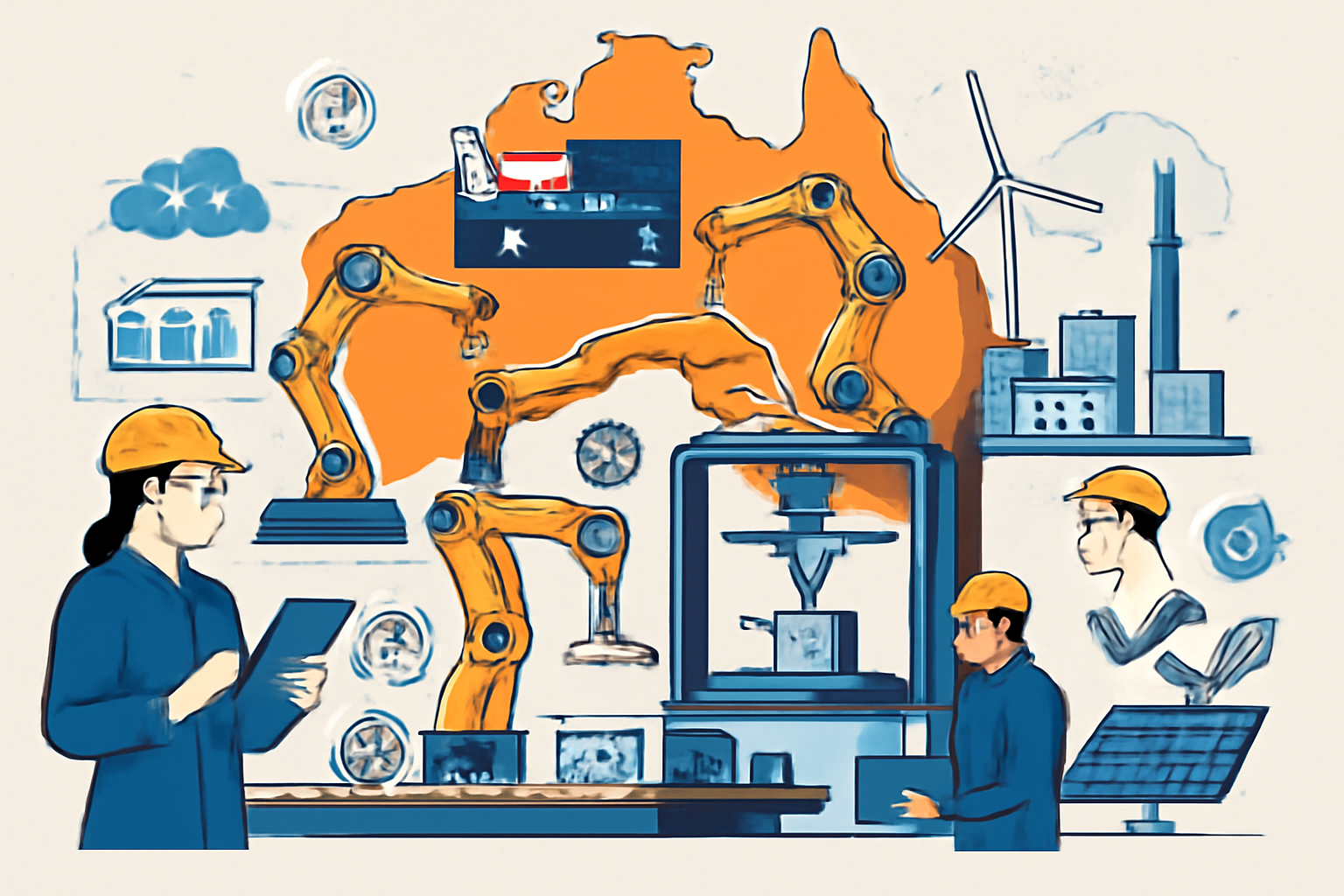
The manufacturing sector in Australia is undergoing a period of transformation as companies respond to both domestic and international challenges. As global competition intensifies and production costs rise, Australian manufacturers are looking toward innovation to maintain their competitive edge. Through the integration of advanced technologies, automation, and sustainability initiatives, the sector is evolving to meet the demands of the modern economy.
The cost of production is one of the biggest challenges facing manufacturers in Australia. Labor and energy costs are high compared to other countries, which has led many companies to explore automation and technological advancements. Automation is a game-changer for Australian manufacturers, particularly in sectors like automotive, food processing, and electronics. Robotic systems and AI technologies are streamlining production processes, increasing efficiency, and reducing labor costs. These technologies are also improving product quality by minimizing human error and ensuring consistency across production lines.
Industry 4.0 has also brought about significant change in the manufacturing sector. By integrating IoT devices, cloud computing, and real-time data analytics into their operations, Australian manufacturers are gaining valuable insights into production performance. This connectivity allows for more precise control over manufacturing processes, enabling companies to respond quickly to issues, reduce waste, and optimize output. Smart factories, which rely on interconnected machines and systems, are becoming a cornerstone of modern Australian manufacturing.
Additive manufacturing, or 3D printing, is another innovation that has begun to reshape the industry. This technology allows companies to produce complex parts and products with greater precision and speed than traditional methods. Industries such as aerospace, medical devices, and automotive are using 3D printing to create custom components on demand, which reduces lead times and minimizes waste. The ability to prototype rapidly also fosters creativity and reduces the risk of costly mistakes in the design phase.
Sustainability is increasingly at the forefront of the manufacturing agenda in Australia. As consumers demand more environmentally friendly products, manufacturers are adopting green practices to reduce their environmental footprint. From using renewable energy sources to reducing waste and improving recycling processes, sustainability is a key focus for many companies. Additionally, some manufacturers are incorporating circular economy principles into their operations, ensuring that products are designed for reuse and recycling.
The Australian government plays a critical role in encouraging innovation in manufacturing. With initiatives like the Manufacturing Modernization Fund, the government provides support for companies that invest in new technologies and automation. These programs are crucial in helping local manufacturers stay competitive in a globalized market and foster long-term industry growth.
As Australia’s manufacturing sector continues to evolve, the focus on innovation and technological advancement is clear. By embracing automation, Industry 4.0, 3D printing, and sustainability, Australian manufacturers are setting the stage for a new era of production that will keep them at the forefront of the global economy.