

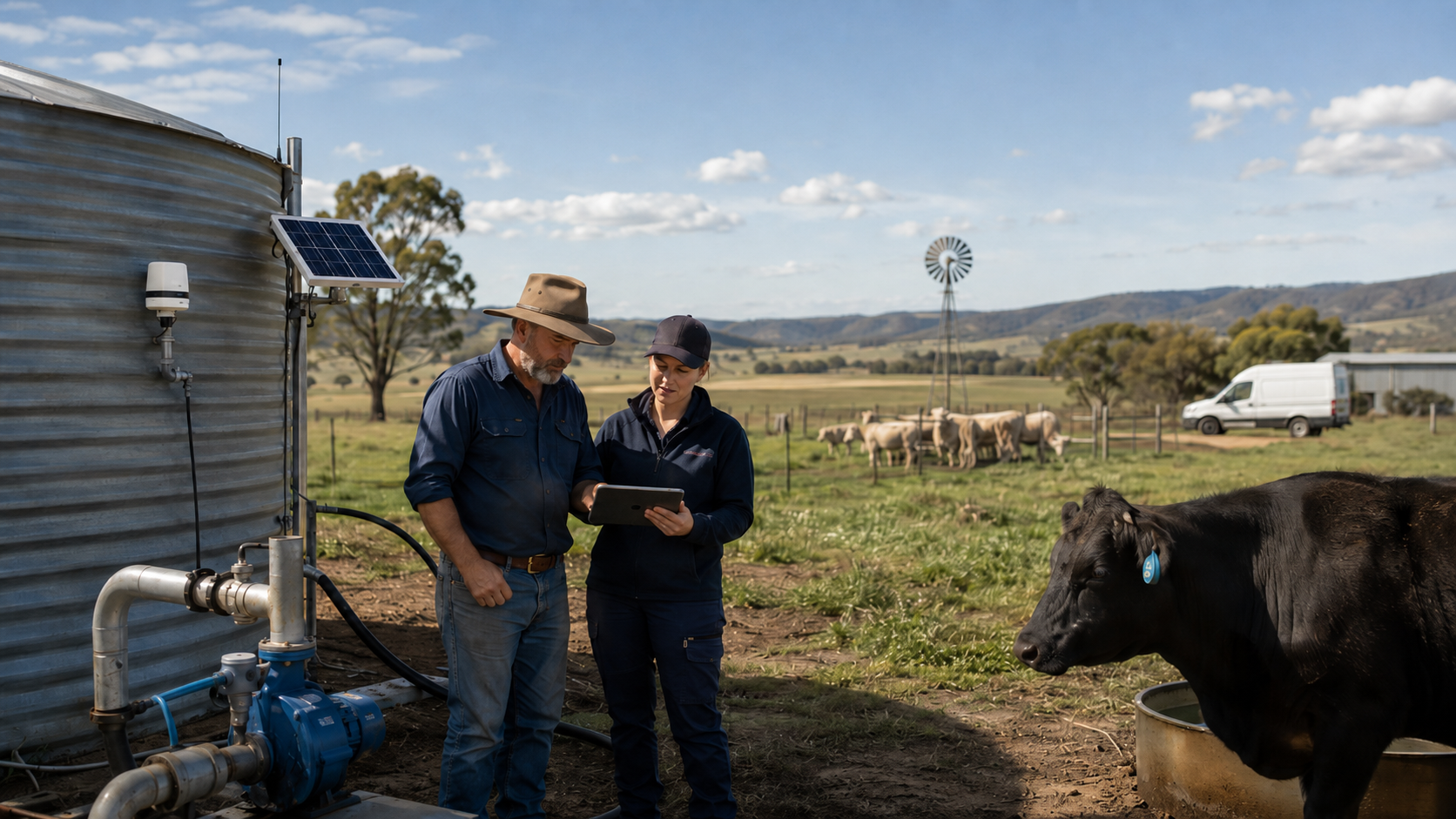
Australia’s regional economy presents technology challenges that are different from those experienced in major metropolitan areas. Distance, workforce availability, connectivity, equipment maintenance, and access to specialised services can significantly affect operating costs.
In 2026, these challenges may create attractive opportunities for SMEs developing agricultural technology, remote monitoring systems, regional healthcare tools, and digital platforms that connect local businesses with services and expertise.
AgTech Opportunities Beyond Farm Machinery
Agricultural technology is often associated with expensive autonomous equipment. However, smaller technology providers can enter the sector through practical monitoring, data integration, and decision-support services.
Examples include low-cost sensors for water tanks, soil conditions, livestock locations, pump performance, storage temperatures, and equipment usage. The commercial value is not simply collecting data. Farmers need alerts and recommendations that support timely decisions.
An SME could provide a subscription combining hardware installation, connectivity, cloud monitoring, and technical support. This model creates recurring revenue while reducing the customer’s need to maintain several disconnected systems.
Designing for Regional Conditions
Products designed for urban offices may not perform reliably on remote properties. AgTech providers must consider weak connectivity, dust, heat, power limitations, large distances, and the technical confidence of different users.
Offline capability, durable hardware, simple interfaces, and clear support procedures may be more important than adding numerous advanced features.
Technology companies should also recognise that agricultural purchasing decisions are often influenced by trusted advisers, equipment suppliers, industry groups, and neighbouring producers. Demonstration projects and local partnerships can be more effective than broad digital advertising.
Remote Maintenance and Technical Support
Regional businesses frequently depend on specialised equipment while being located far from qualified technicians. Remote monitoring can identify problems before a failure interrupts operations.
A technology SME could build systems for refrigeration equipment, irrigation pumps, renewable energy assets, water treatment, or commercial machinery. Video support, digital maintenance records, and predictive alerts could reduce unnecessary travel and shorten downtime.
This model may also help metropolitan service companies extend their reach into regional markets through local implementation partners.
Regional Health Administration
Healthcare technology is another potential growth area, particularly in administrative and non-diagnostic functions. Clinics and community care organisations may need better scheduling, referral coordination, workforce management, secure communication, and equipment tracking.
A small provider could create a platform for mobile healthcare teams that records appointments, travel routes, task completion, and documentation requirements.
Because health-related information is sensitive, privacy, access controls, secure storage, and audit records must be central to product development. Technology firms should obtain specialist guidance before handling clinical data or making claims related to patient outcomes.
Innovation Partnerships and Commercial Testing
CSIRO’s Innovate to Grow program has supported SMEs seeking to understand research and development, collaboration opportunities, and pathways for technology commercialisation.
Official reference: CSIRO Innovate to Grow
Programs of this kind can help founders assess technical feasibility, strengthen research partnerships, and prepare for larger development projects.
Building a Sustainable Regional Business
A common mistake is to launch a product before validating installation, training, and support costs. In regional markets, customer acquisition and service delivery may require travel, local partners, and longer sales cycles.
A stronger model begins with one geographic area and one measurable operational problem. The provider can test hardware durability, connectivity, support requirements, and customer willingness to pay before expanding.
Australian regional customers are unlikely to purchase technology simply because it is innovative. They will invest when a solution is reliable, practical, and supported by people who understand local operating conditions. SMEs that combine technical capability with regional partnerships can turn this trust requirement into a meaningful competitive advantage in 2026.