

The Retail Experiment That Became Infrastructure
When Plattar launched its 3D and augmented reality platform for product visualisation, the premise was straightforward: let customers experience products in their own space before purchase. The Carlton, Victoria-based company has since evolved into a critical enabler for retailers and manufacturers seeking to bridge the gap between digital browsing and physical evaluation.
Plattar’s platform leverages ARKit and ARCore technologies alongside browser evolution to create a new enabler for customers to experience products in 3D, transforming how businesses present everything from furniture to industrial equipment. The company’s inclusion among Australia’s top three VR/AR startups by StartupBlink reflects the commercial traction of AR-powered product configuration.
Grub Lab’s $6M Bet on Interactive Dining
In March 2026, Kurri Kurri-based Grub Lab raised $6 million from Quantaco to expand its augmented reality-powered kids’ menus into the United States. The startup’s approach — transforming traditional restaurant menus into interactive, QR-triggered AR experiences with games and digital interactions — targets a segment that has historically been underserved by technology innovation: family dining.
The funding round signals investor confidence that AR can deliver measurable engagement improvements in hospitality, a sector where customer experience differentiation is critical to survival.
Viewa and the Virtual Try-On Economy
Viewa has developed an AI, AR, and 3D visualisation platform designed to help businesses showcase and customise home products in interactive digital environments. The company offers product visualisation, virtual customisation, and immersive shopping capabilities, enabling retailers and manufacturers of window furnishings to reduce returns and increase conversion rates by letting customers see products in their actual spaces before purchase.
Enterprise Applications Beyond Retail
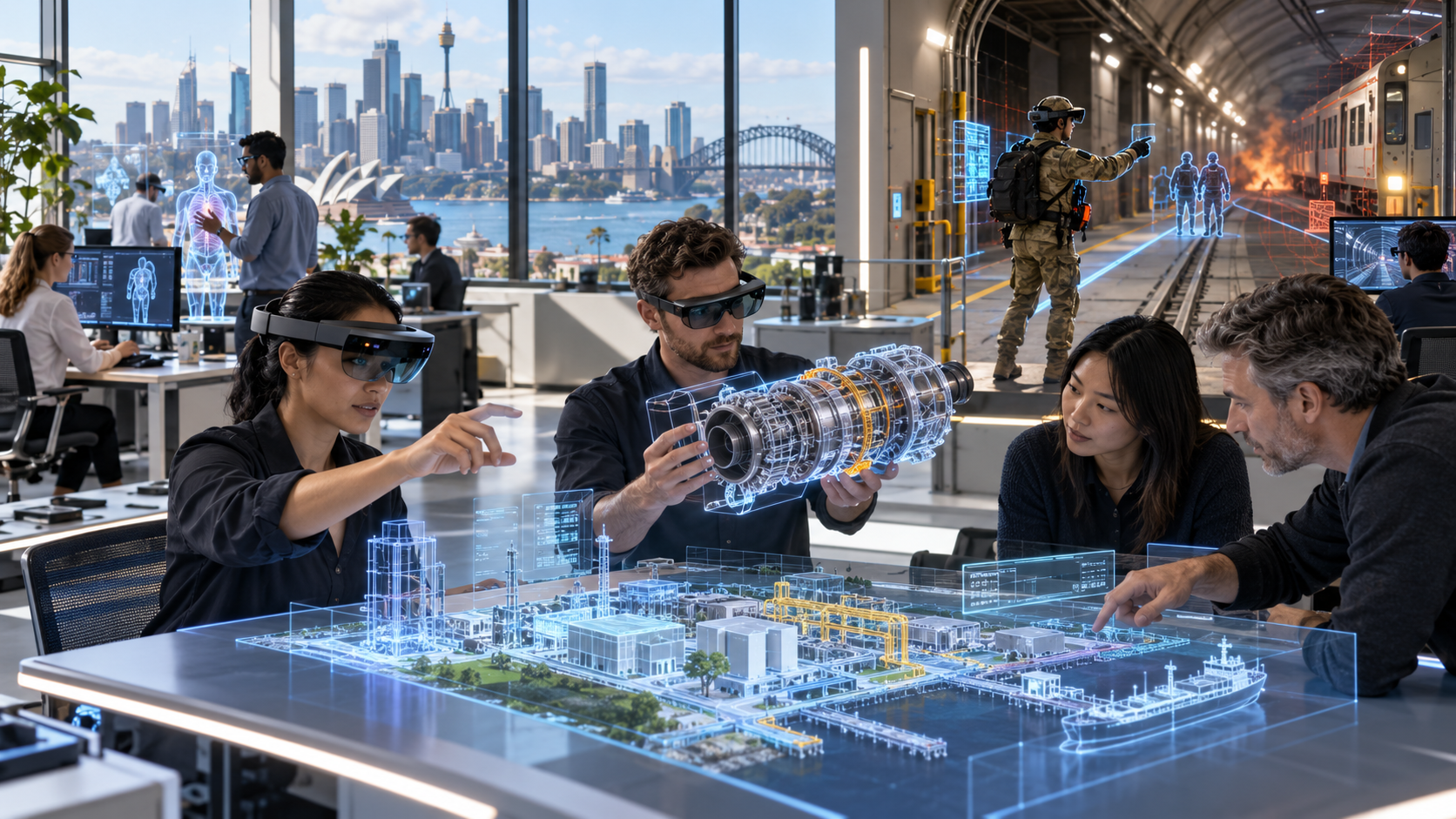
The most significant revenue opportunities for Australian AR startups may lie in enterprise applications. CatalystXR, acquired by The Many in April 2026, has demonstrated that immersive technology’s enterprise value extends far beyond marketing activations. The studio’s projects span cultural institutions, mining, healthcare, sport, and enterprise, with simulation-based environments increasingly used for safety training and operational planning.
Jamie Gilroy, founder of CatalystXR, identified a structural shift in how businesses approach immersive technology: “We’re seeing a shift from curiosity-led pilots to strategic deployment across industries”.
The $19.9 Billion Market Signal
Grand View Research projects the Australian augmented reality market will reach US$19.9 billion by 2033, expanding at a compound annual growth rate of 30.9% from 2026. This forecast encompasses hardware, software, and services across retail, healthcare, automotive, aerospace, and defence applications.
The convergence of these trends — Plattar’s product visualisation, Grub Lab’s hospitality engagement, Viewa’s virtual customisation, and CatalystXR’s enterprise simulation — suggests that Australian AR startups are building a diversified commercial foundation rather than chasing a single use case. The sector’s US$156.8 million ecosystem value, while modest by global standards, represents a platform for disproportionate influence in niche verticals where Australian companies have established genuine competitive advantages.