

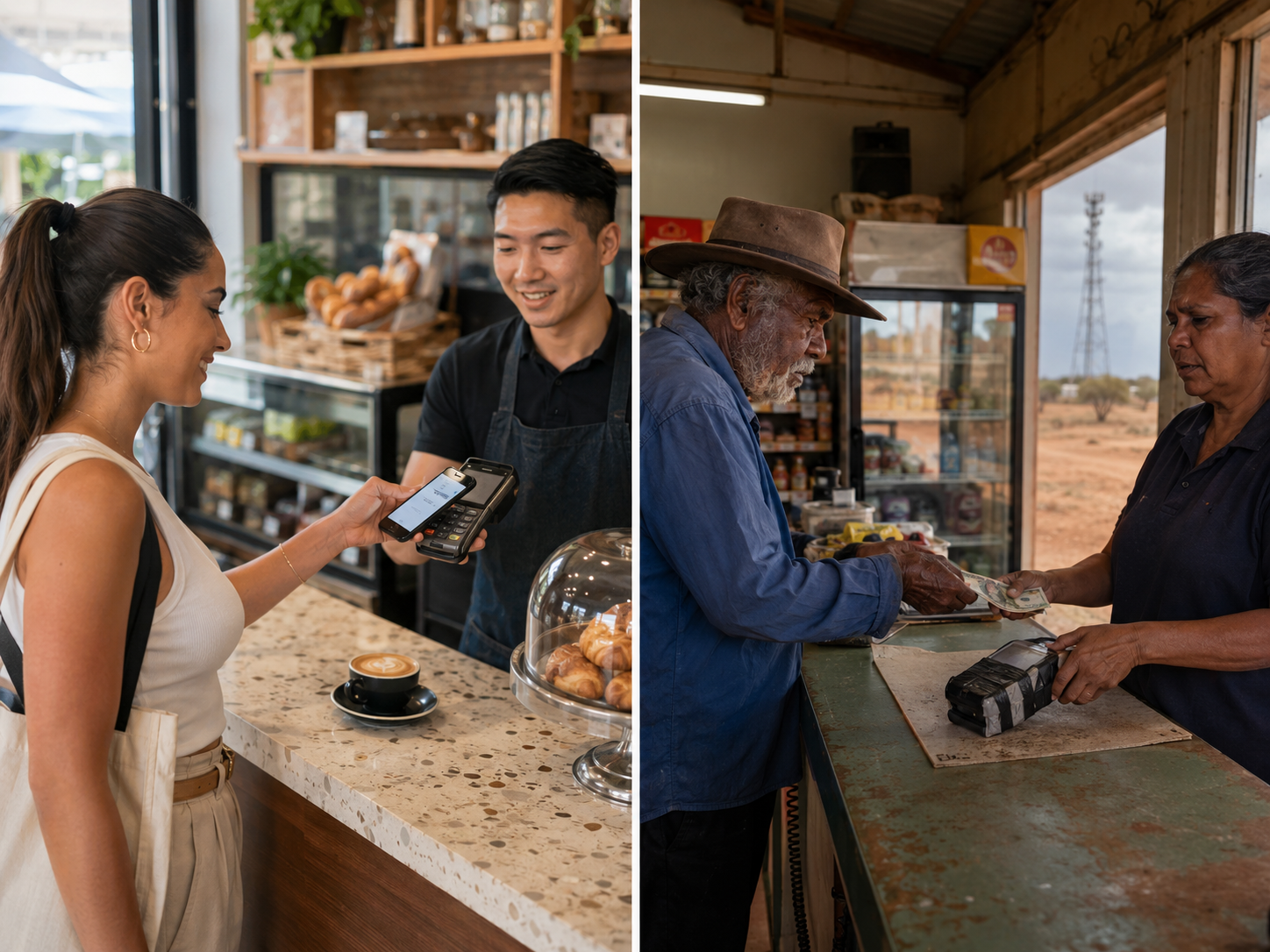
A Cashless Future Does Not Affect Every Australian Equally
The rapid growth of digital payment applications in Australia in 2026 is creating a more convenient economy for millions of people. A smartphone can pay for groceries, transfer money and manage recurring bills in seconds.
However, the same transition raises a difficult question: what happens to people who cannot rely on a smartphone, stable internet connection or easily accessible digital banking services?
This issue makes Australia’s payment transformation more complex than a simple contest between cash and technology.
The Reserve Bank of Australia’s consumer payment research found that cash use had fallen significantly by 2022, while also showing that physical money continued to matter for some consumers and circumstances.
The RBA’s analysis is available here: Consumer Payment Behaviour in Australia.
The key policy and business challenge for 2026 is therefore not simply how to make payments faster. It is how to modernise the system without leaving vulnerable users behind.
Regional Australia Highlights the Infrastructure Problem
Digital payments depend on more than an application.
They rely on telecommunications, electricity, financial infrastructure and functioning devices. In major urban areas, consumers may rarely think about these dependencies. In regional or remote communities, connectivity limitations can make them more visible.
A temporary network disruption can turn a simple checkout into a serious problem when neither the customer nor the merchant has a practical alternative.
Natural Disasters Show Why Resilience Matters
Australia’s exposure to floods, bushfires and severe weather gives this debate a real-world dimension.
During an emergency, electricity and communications services can be disrupted. A payment system designed only for ideal conditions may become difficult to use precisely when communities need access to essential goods.
This does not mean digital payments should be slowed. It means resilience should develop alongside innovation.
Banks, payment providers, merchants and policymakers need to consider backup options, system redundancy and clear procedures for periods when normal infrastructure is unavailable.
Digital Exclusion Has Several Forms
A person can be digitally excluded for many reasons.
Some older Australians may be less comfortable with rapidly changing applications. People with disability may face poorly designed interfaces. Low-income consumers may struggle with device replacement or reliable connectivity. Others may simply prefer physical payment methods because they are easier to understand and control.
Accessibility must therefore be considered at the design stage.
Clear language, readable interfaces, strong customer support and simple security procedures can help more people use digital payment applications safely.
Cash and Digital Payments May Need to Coexist
The rise of payment apps does not necessarily require the immediate disappearance of cash.
Digital transactions offer major benefits: speed, detailed records and integration with other financial services. Cash can still provide utility during outages and for consumers who cannot easily access digital alternatives.
The most resilient payment environment may therefore be one that expands modern technology while maintaining practical alternatives.
The 2026 Debate Is Really About Choice
Australia’s digital payment growth is often presented as evidence of technological progress. That is only part of the story.
A successful payment system must also be available, understandable and reliable.
For a city commuter, a mobile wallet may provide unmatched convenience. For a remote community experiencing a communications outage, the same system may expose an infrastructure dependency.
The future of payments in Australia will be shaped by how effectively the country manages both realities.
The central challenge in 2026 is not whether digital payment applications will continue to grow. The deeper issue is whether the benefits of that growth can be distributed widely while preserving trust, resilience and meaningful payment choice.