

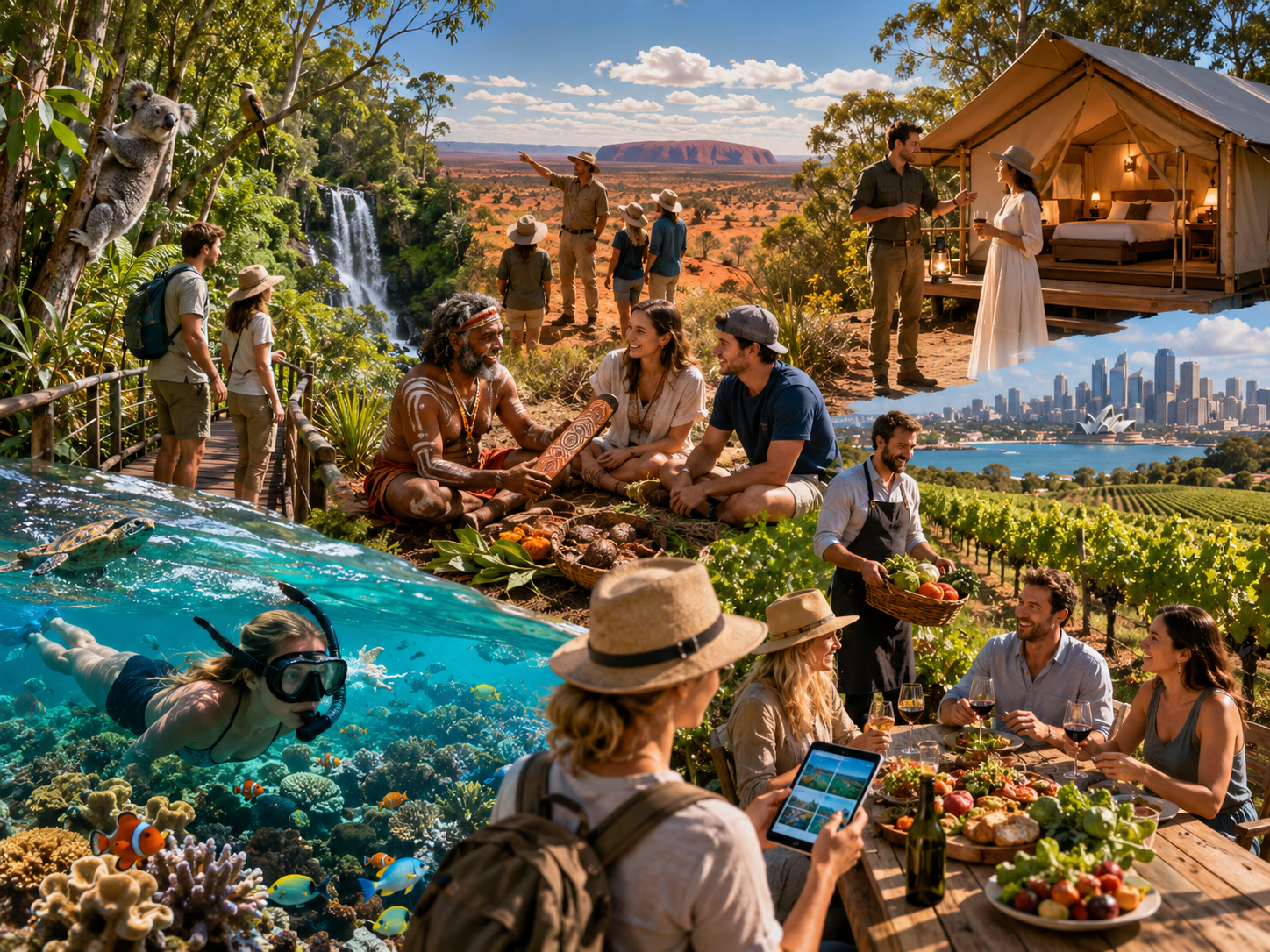
Australia’s tourism industry is one of the country’s most important sectors, generating significant revenue and creating jobs. For small and medium-sized enterprises (SMEs), the tourism sector offers a wealth of business opportunities that cater to a wide range of consumer preferences. Whether through eco-tourism, cultural experiences, or food tourism, SMEs can create specialized services that attract both local and international visitors.
One major area of growth is the eco-tourism market. Australia’s vast natural landscapes, such as the Great Barrier Reef, the Outback, and its national parks, offer SMEs the opportunity to develop sustainable tourism experiences. Visitors are increasingly seeking environmentally responsible options that allow them to explore nature without leaving a negative impact. SMEs can focus on creating low-carbon, sustainable tours, offer eco-friendly accommodations, or develop conservation-focused travel packages.
Australia’s vibrant cultural tourism market also presents vast opportunities for SMEs. Tourists are eager to engage with the nation’s rich cultural history, from its Indigenous heritage to European influences. Small businesses can develop experiences that showcase Indigenous art, storytelling, and traditional food, or provide city tours that highlight the unique cultural fusion in Australia’s urban centers.
In addition to cultural tourism, food and wine tourism are thriving. Australia’s diverse regions produce some of the world’s finest wines and fresh ingredients. SMEs can take advantage of this by organizing food tours, cooking classes, wine tastings, and farm-to-table dining experiences. By focusing on locally sourced products and highlighting regional specialties, SMEs can create memorable experiences that appeal to food lovers and culinary tourists.
Another growing market within Australia’s tourism industry is luxury travel. High-net-worth individuals are seeking exclusive, tailored experiences that offer both luxury and authenticity. SMEs can carve out a niche by offering private tours, bespoke travel itineraries, or luxury accommodations in off-the-beaten-path locations. By focusing on exceptional service and unique offerings, small businesses can cater to this lucrative market.
Lastly, the increasing reliance on digital platforms in the tourism industry provides SMEs with the opportunity to reach a global audience. Online booking systems, targeted social media campaigns, and customer reviews all play crucial roles in attracting international visitors. SMEs can enhance their visibility and streamline their operations by incorporating these digital tools into their business models.
By focusing on unique and personalized experiences, embracing sustainability, and leveraging digital marketing, SMEs can thrive in Australia’s growing tourism sector. With creativity and innovation, small businesses can tap into a wide range of opportunities and contribute to the country’s dynamic tourism landscape.