

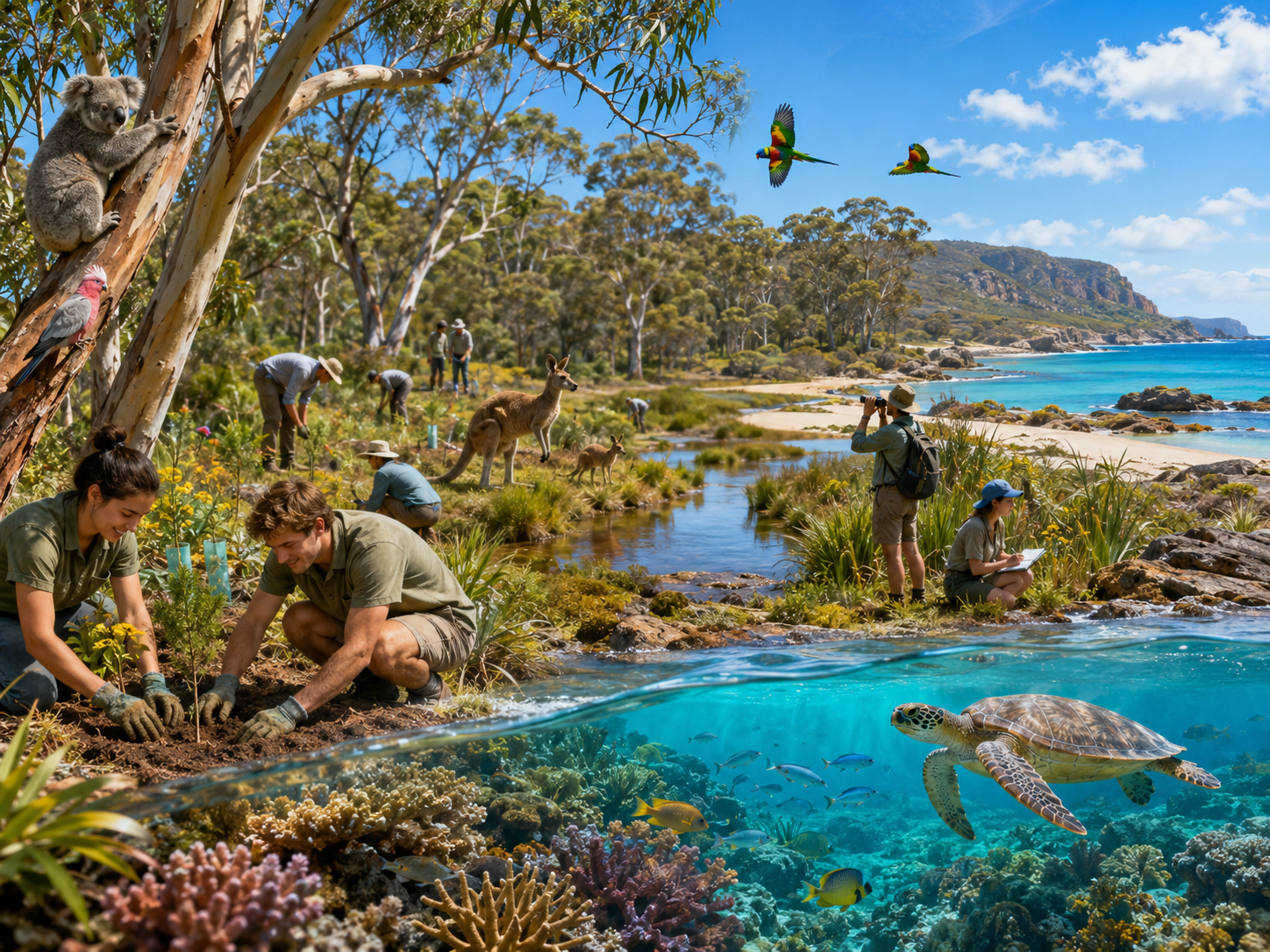
Australia’s ecosystems are among the most distinctive in the world, hosting a wide array of species found nowhere else. Preserving this natural heritage requires coordinated efforts from environmental organizations that combine advocacy, practical conservation, and community engagement to foster sustainability.
The Australian Conservation Foundation (ACF) has long been a leading voice in shaping environmental policy. By conducting research, advocating for climate action, and engaging the public, the ACF ensures that ecological concerns influence government decision-making and corporate behavior. Their campaigns often focus on renewable energy, forest preservation, and climate resilience.
Bush Heritage Australia operates by acquiring land of high ecological significance. Their conservation strategies include habitat restoration, wildlife monitoring, and control of invasive species. These projects protect vulnerable species while maintaining the integrity of ecosystems that are critical for ecological processes.
WWF-Australia combines global expertise with local action. Their programs address threats such as deforestation, marine degradation, and unsustainable agriculture. By collaborating with local communities, scientists, and policymakers, WWF-Australia promotes solutions that balance human needs with the health of the environment.
Grassroots initiatives are equally important. Landcare Australia mobilizes volunteers to rehabilitate rivers, plant native vegetation, and manage soil erosion. These local efforts foster community participation, strengthen environmental awareness, and empower citizens to make a tangible impact on their surroundings.
Corporate partnerships complement these initiatives. Many environmental organizations work with businesses to implement sustainable practices, reduce environmental footprints, and fund conservation projects. These collaborations integrate environmental responsibility into economic activity and promote long-term sustainability.
Education and awareness are central to these organizations’ missions. Programs targeting students, community members, and policymakers help build understanding of climate change, biodiversity, and sustainable living. Knowledge empowers individuals to adopt eco-friendly behaviors, amplifying the impact of conservation efforts.
Policy advocacy ensures that environmental protection is embedded in national and regional decision-making. Organizations provide scientific data and expert recommendations to influence legislation on land use, wildlife protection, and climate mitigation. Their guidance helps shape policies that are both effective and scientifically grounded.
The contributions of environmental organizations extend beyond habitat protection. Healthy ecosystems support food security, water quality, and climate resilience, benefitting both nature and society. By promoting sustainable practices, these organizations play a crucial role in safeguarding Australia’s environmental and social future.
Through conservation, education, advocacy, and collaboration with communities and businesses, environmental organizations in Australia drive sustainability and ecological preservation. Their integrated approach ensures that natural ecosystems remain resilient and that future generations inherit a balanced and thriving environment.