

The Foreign Capital Influx
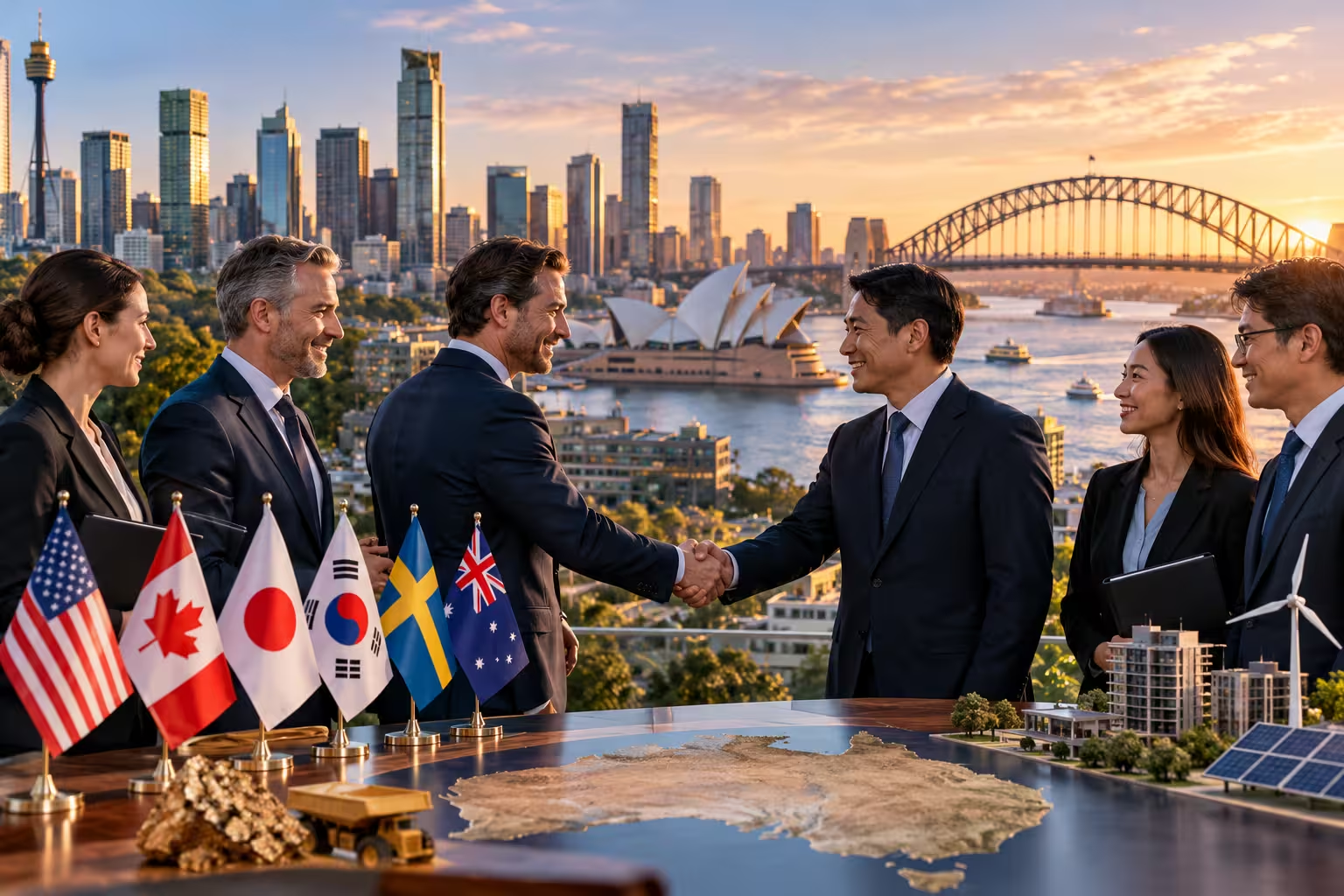
Global investors have made Australia one of their preferred destinations for M&A in 2026, with inbound deals representing 45 per cent of total deal value, up from 30 per cent a year earlier. US, Canadian and Japanese capital have led the charge, attracted by Australia’s stable regulatory environment, rich natural resources and strategic position in the Indo-Pacific region.
Offshore buying has remained particularly strong in the small and medium enterprise segment, with foreign buyers accounting for roughly 30 to 40 per cent of Australian M&A by value over the past 12 months. This trend reflects a global appetite for Australian businesses that possess unique capabilities, technology or market positions.
US Private Equity Leads the Charge
US private equity firms have been among the most aggressive acquirers. I Squared Capital, a firm with US$60 billion under management, agreed to acquire Australian outdoor advertising company oOh!Media at an equity value of A$898 million (US$634 million), ending a months-long takeover contest that drew interest from several global private equity firms.
In the insurance sector, a consortium including Dragoneer Investment Group, Amwins Group and KKR agreed to acquire Steadfast Group for A$7.7 billion (US$5.52 billion). The transaction demonstrates how US-based buyers can structure complex deals that split target companies into distinct business segments, with Amwins acquiring Steadfast’s underwriting agency business and Dragoneer and KKR retaining ownership of the broking business.
Asian and European Interest Intensifies
Beyond US capital, Asian and European investors have also demonstrated strong appetite for Australian assets. Hanwha, the South Korean conglomerate, gained access to Australian shipbuilder Austal’s books to shore up an up to US$1.2 billion takeover offer for its US operations. The deal reflects growing defence and strategic industrial interest in Australian assets.
Swedish private-equity firm EQT has been particularly active, with its pursuit of asset manager Perpetual and its A$9.4 billion offer for Cleanaway Waste Management. EQT also agreed to acquire Australian smart parking technology firm Orikan, demonstrating the breadth of European interest across sectors.
In the aged care sector, Stonepeak, through its social infrastructure platform Volarae Living, agreed to acquire Estia Health, one of Australia’s leading residential aged care operators. The transaction represents a second investment for Volarae Living following its February 2026 investment in Aura Holdings, signalling growing international interest in Australia’s healthcare and social infrastructure assets.
The Regulatory Landscape
Australia’s regulatory environment has become more demanding for cross-border acquirers. From January 2026, certain transactions require ACCC notification and clearance before completion—the most significant merger control reform in decades. Foreign investment reviews have also become more nuanced, with deals involving critical infrastructure, minerals, technology or sensitive data facing higher scrutiny.
The new mandatory merger control regime requires notification to the ACCC for acquisitions meeting certain thresholds. This has extended approval timelines and increased execution risks for acquirers, according to BCG research. Australian dealmakers will need to adopt a more targeted and disciplined approach to mergers and acquisitions as regulatory change, higher capital costs and persistent valuation gaps continue to weigh on transaction activity.
Why Australia Remains Irresistible
Despite these complexities, Australia’s appeal to global acquirers remains undiminished. Corrs Chambers Westgarth expects renewed foreign direct investment in Australian targets, led by US bidders re-entering the market amid stabilising interest rates, higher CEO confidence and the revival of private equity activity.
Australia’s reputation as a “stable, resource-rich and innovative economy” will continue to attract long-term investors, the firm concludes. “As global conditions evolve, these strengths are expected to underpin Australia’s ongoing appeal to international dealmakers in 2026”.
For global corporations and financial sponsors, Australia offers a unique combination: a sophisticated market with English-speaking business culture, world-class resources, a growing technology sector, and strategic positioning at the crossroads of Asia-Pacific trade. As geopolitical tensions reshape global supply chains, Australia’s importance as a destination for cross-border M&A is likely to grow further.